
How to Hide PBN Links (2026): Protect Your Network from Google & Competitors
Using Private Blog Networks (PBNs) remains one of the most debated SEO tactics today. While the Google Webspam team considers PBNs a black-hat technique penalizing websites that receive unnatural link juice their ability to deliver quick ranking boosts keeps SEOs searching for safe ways to use them.
That’s where understanding how to hide PBN links becomes essential. By minimizing digital footprints, spreading hosting and IPs, and using smart linking strategies, you can reduce risks while still benefiting from the power of PBN backlinks.
So, how exactly can you keep your PBN links hidden from Google and competitors without jeopardizing your SEO efforts? Let’s explore the safest, most effective methods.
What Are Hidden PBN Links?
Webmasters use PBN links to improve website rankings faster through passing the authority of multiple websites owned by the target money site.
Essentially like link farms, private blog network links are considered illegal by the webmaster’s quality guideline that’s why they are hidden to avoid getting the main site penalized.
PBN links are considered hidden when they cannot be detected easily by third-party crawlers that offer backlink monitoring such as Moz, SemRush, Ahref, and MajesticSEO to name a few.
They are made hidden by reducing the PBN footprint of the site so it will avoid unwanted eyes like from your competitors to evade search engine crawlers being suspicious of your link sources.
For one to uncover if the a site is part of a private blog network, one must learn to recognize PBN website.
Can Search Engines Crawl Hidden PBN links?
Google’s PageRank defines the calculation of knowing which websites will be on the first page of the search engine results page.
One of the factors calculated is the site authority and the very essence of using PBN is to improve the authoritativeness of your main money site.
This gives us the understanding that Googlebot must be able to crawl through your PBN links, so the answer to our question is YES, search engine bots can crawl hidden PBN links.
What SEO geeks are doing is making PBN sites appear like regular public websites to avoid getting detected by search engine crawlers.
At the same time, there are methods applied so that third-party bots from backlink monitoring tools will not be able to crawl through these PBN links which makes them hidden.
How Do Tools Discover Links?
Third-party SEO tools available online also have crawler bots that travel their way to analyze website data.
These tools help every SEO and webmaster assess how they are to plan their campaigns to boost their site rankings and also to study how their competitors are ranking better in the SERP.
This means that PBN links can still be found especially by keen eyes when tools are properly used together with a sufficient understanding of how PBN works.
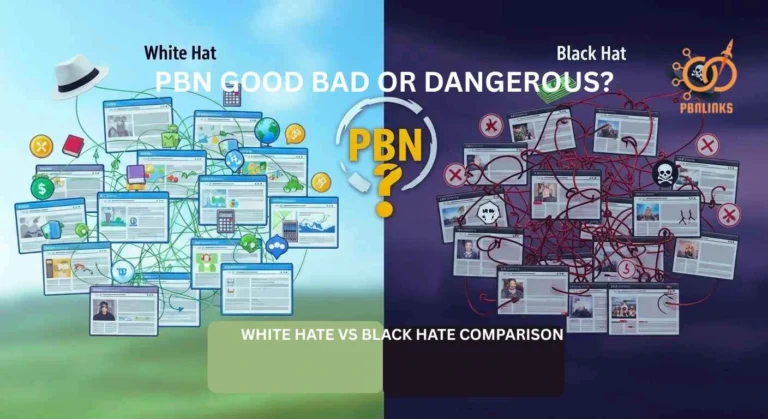
Generally, the implementation of private blog networks to boost website ranking is considered a gray hat technique and thus there is an accompanying risk with PBN.
Tools available online can expose if a website is part of a PBN and thus, webmasters must do their best to hide their PBN links by reducing their PBN footprints.
This is not only so they can avoid getting penalized as well, but also avoid competitors outranking you by knowing how you are utilizing backlinks from PBNs.
How to Hide Your PBN Links?
By now, you’ve understood how a PBN link is considered hidden and this will help you on how you are to hide your own PBN links.
Knowing that it requires a knowledgeable SEO person to detect a website utilizing PBN links, this tells us that your first line of defense to hide your PBN links is by reducing your PBN footprints.
This includes housing your purchased expired domains on different domain registrars and hosting your websites on different hosting servers.
PBN sites within your network should all look independently owned so you must consider diversifying where you house all of your domains.
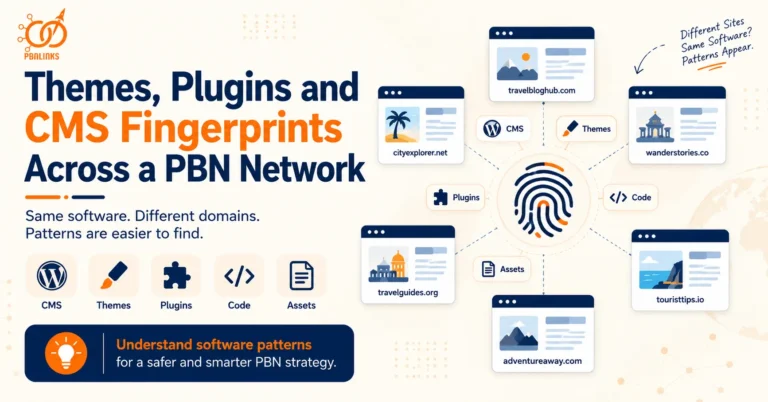
Using different themes and website design on UI/UX will also do the trick of making all the domains you own appear as if it belongs to different individuals.
Investing in quality content also reinforce hiding your PBN links not only in the eyes of your competitor but also to avoid getting caught by search engine algorithm.
The combination of these techniques will ensure that your backlink profile looks natural.
To further hide your PBN links, two more methods are being used by expert webmasters that also set them apart from amateurs.
Robots.txt Method
The web has two kinds of bots – a good bot and a bad bot. These bots are automation software that is interacting with websites.
From the name itself, good bots are made by reputable companies and do automated functions that help improve user experience and to provide more data-driven results.
Bad bots on the other hand are designed to outright violate any rules present as they are intended to do illegal activities on any targeted domain but we won’t dig much deeper into these kinds of bots.
One of these good bots is website crawlers like Google Bots whose function is to index sites and gather website data to help search engines produce accurate search results.
Now, Robots.txt is a file added to the website that serves as a set of instructions to bots on how they should behave in your domain.
Good bots like search engine bots, social media bots, and marketing bots are adhering to what the Robots.txt file says which isn’t the case with bad bots.
Now, third-party SEO tools have their own bots which are categorically under marketing bots.
These said web tools are using their web crawlers to gather data to support the users in making data-driven SEO campaigns.
Webmasters who know this fully are adding disallow instructions on certain bots to prevent third-party SEO tools crawlers to travel through the backlinks of the main site.
Thus, with the use of the robots.txt file, it will be harder for competitors to analyze your backlink profile.
.htaccess Method
.htaccess is a file that houses high-level configuration control of your website which enables you to implement changes to your website without reconfiguring your server settings.
While this technique is configured on the back-end side of your website, its effects on the front-end are powerful.
By properly utilizing your .htaccess file, you will be able to:
- Implement 404 and 301 Redirects
- Remove unecessary extensions such as .html and .php
- Password Protect Directories
- Bar Hotlinks
- Site Rewrite
These aforementioned ability offered by the .htaccess file not only prevents your PBN links to go busted but also improves your visibility in the search engine.
Getting to the front of the search engine results page is a competition that every SEO must learn to navigate and each one has its own way of backlink-building strategies.
At the end of the day, these campaigns must be and will always be data-driven, and thus, you don’t want your network and strategies to be seen by your competitors if you want to reach your target spot in the SERP and maintain that position.
Hope these article has added new knowledge to you as you work your way towards being top-ranked website on your niche.